Every price in RSMeans is a national average. That single fact causes more bad estimates than any other misunderstanding about the database, because a national average is not your local price. A concrete wall that costs one number in Birmingham costs a different number in San Francisco, and the difference is not a rounding error. The fix is one formula: local cost equals national average cost times your local City Cost Index divided by 100. This guide shows you how to use that formula correctly, how to read a line item without double-counting overhead and profit, and the checks that keep a localized price honest.
Who this is for: estimators and contractors who price from RSMeans data, whether from the books or RSMeans Online, and need the number to hold up in the city where the work actually happens.
What RSMeans Actually Gives You
RSMeans is a construction cost database published by Gordian, organized by CSI MasterFormat divisions. Each line item gives unit costs for material, labor and equipment, plus the crew composition and production rate behind the labor number. Per a 2026 guide to the database, it tracks more than 97,000 unit cost line items across 970 locations in the US and Canada. That scale is the point: the database is built to be adjusted, not quoted as-is.
Every cost in it is a national average until a location factor is applied. The database does not know your zip code unless you tell it. An estimator who lifts a line item straight from the book and puts it in a bid has priced the average American job site, which exists nowhere. Our construction estimating services price from RSMeans Online with the location factor applied for the project zip code, supplemented by supplier quotes, because the national number is only the starting point.
What moves costs by place is mostly labor: wages, availability, and union versus open shop. Material transport and local availability matter too, along with permits and fees, local codes and taxes, and climate. Labor is usually 40 to 60 percent of an installed cost, per the mybuilderbase regional pricing guide, which is why the labor index moves a local price more than the material index does on most lines.
The City Cost Index, in Plain Terms
The City Cost Index, or CCI, is the location factor. It uses 100 as the national-average baseline: an index above 100 means the place costs more than the national average, and below 100 means it costs less. Regional indexes commonly range from the high 70s to the 130s across US markets, per the same mybuilderbase guide, so the spread between the cheapest and most expensive markets is wide enough to sink a bid.
Two details matter. First, RSMeans publishes a composite index, one single total number, and weighted indexes split by material, installation (labor plus equipment rental), and total in place, per CSI MasterFormat division. The composite suits quick estimates and feasibility work. The weighted indexes suit detailed estimates where the material and labor mix differs from the standard building mix. A single line item multiplied by the composite index can mislead, and the more items you compile, the closer the result runs to the actual local cost.
Second, location factors are published by 3-digit zip-code area or city, not by exact 5-digit zip. There is no factor for every 5-digit zip code. For a city that is not listed, use the factor for a nearby city with similar economic characteristics. And indexes move by edition and year, which is why you should never quote one from memory. A 2026 guide lists New York City at 131.2, San Francisco at 128.4 and Birmingham, Alabama at 82.7, while an older RSMeans location-factor table gives Birmingham a total of 87.3, with material at 97.5 and installation at 74.1. Those two Birmingham numbers disagree because they come from different editions. That disagreement is the lesson: always pull the index from the current licensed edition at bid time, and date-stamp every figure you use.
The Formula, Worked Three Ways
Local cost = national average cost x (local CCI / 100).
Work it once with the arithmetic illustration from the american-estimation.com guide. A national-average line of $200 with a location factor of 1.10 becomes $220. The same arithmetic at whole-project scale: a $250,000 national estimate in a market with an index of 118 becomes $250,000 x 1.18, which is $295,000. Both are illustrations of the arithmetic, not real prices for any named city.
To compare two cities, divide, never subtract. A cost that is $100 in a city with an index of 120 is $100 x (90 / 120), which is $75, in a city with an index of 90. Subtracting the indexes, 120 minus 90 equals 30, and reading that as 30 percent is the most common arithmetic error in localized pricing. The ratio is what matters, not the gap.
Time adjustment is a separate calculation from location adjustment, and mixing them up is the second common error. A CCI compares places within one period; it is not a price trend and must not be used to compare this year's cost with a cost from five years ago. To move an old cost forward in time, use this formula: adjusted cost equals old cost times current index divided by the index for the old date. Location first, then time, or time first, then location, but never one factor doing both jobs.
Bare Costs vs Total Incl. O&P
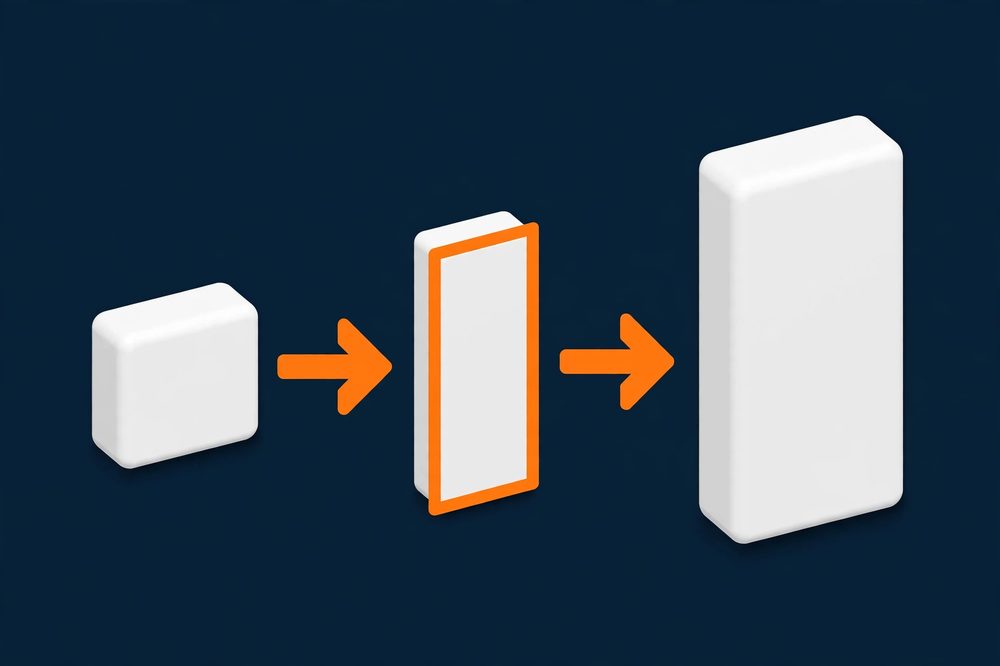
Every RSMeans line item shows five numbers, and knowing which one you are looking at is the difference between a price and a mistake. A line shows bare material cost, wholesale and delivered, with no installation labor; bare labor cost, installation by crew and production rate; bare equipment cost; a total bare cost; and a Total Incl. O&P, which adds overhead and profit.
Here is the anatomy on a worked line from the constructionbids.ai guide, labelled as that guide's example and not a current price: a 12-inch foundation wall, C-1 crew, 14.5 cubic yards per day. Bare material $142.00, bare labor $89.50, bare equipment $12.75, total bare $244.25, total incl. O&P $310.00 per cubic yard. In that example the O&P is roughly 10 to 15 percent overhead and 10 percent profit, per the same guide.
Those O&P percentages are model-dependent, not a standard. A public-sector model published by GovStar puts general requirements at 5 to 10 percent and contractor O&P at 15 to 20 percent. Those are different models for different purposes. Do not average them and do not present one as the standard rate. Know which model your number comes from before you build on it.
The trap is adding markup to a figure that already includes it. Take the guide's $310 line, which already includes O&P, and add a further 20 percent markup on top: $372. The extra $62 is double-counted overhead and profit, and it lands straight in your bid price, where it makes you look expensive for no reason. The correct route is the bare-cost route: start from the total bare cost, apply the location factor, then add overhead and profit once. Confirm which version of the line you are looking at before adding anything, because FEMA cost-source guidance and the american-estimation.com guide both warn against the same double count.
The Takeoff-to-Price Workflow
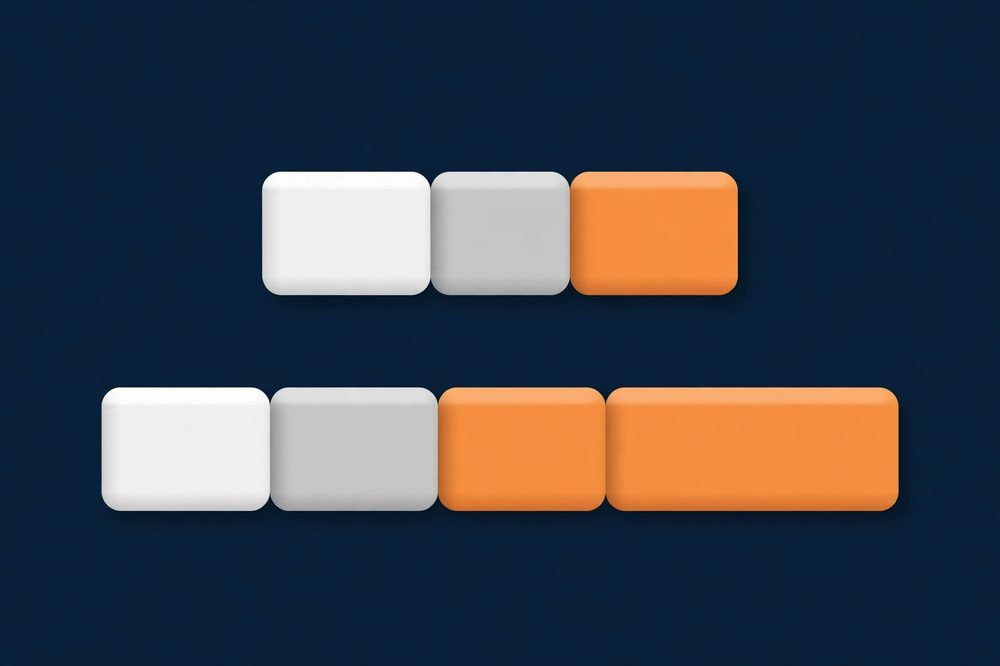
Localizing is a workflow, not a single multiplication. Run every line through the same seven columns, and the estimate defends itself in a bid review. The table below is a format example: the national average and the index always come from the current licensed edition at bid time, never from memory and never from this guide.
| Line item | Unit | National average | CCI applied | Local bare | Local incl. O&P | Live-quote check |
|---|---|---|---|---|---|---|
| 12 in foundation wall | CY | Current edition | Current edition, bid time | National x CCI / 100 | Bare + O&P once | Supplier quote |
| 4 in concrete slab on grade | SF | Current edition | Current edition, bid time | National x CCI / 100 | Bare + O&P once | Supplier quote |
| Interior wood door, pre-hung | Each | Current edition | Current edition, bid time | National x CCI / 100 | Bare + O&P once | Supplier quote |
The quantities themselves come from the takeoff. Our rebar takeoff guide shows how a line-item takeoff is built from the structural drawings, and the RSMeans method prices each of those lines. A localized unit price on a wrong quantity is still a wrong number, so the takeoff and the pricing have to be right together.
Before the number goes into a bid, check seven things: the date of the data, whether the figure is a national average or already local, the scope of the line (formwork, finishing, fasteners, accessories), the units (square feet versus square yards, lineal feet versus each, installed versus supply-only), the labor basis (union or open shop, prevailing wage, crew, productivity), whether O&P is already included, and a live supplier or subcontractor quote for a few key items. A line that fails any one of those checks gets verified, not priced.
Three Mistakes That Break a Localized Price
Using the composite index on a single line item. The composite is a building-average blend. On one line, especially a labor-heavy or material-heavy line, it can be far off. Use the weighted material and installation indexes for detailed work, and reserve the composite for feasibility and quick checks.
Using a location index to move a price through time. A CCI compares places in the same period. An old cost needs the time formula, current index divided by the index for the old date, applied separately. A 2023 price localized with a 2027 index is wrong in two directions at once.
Pricing from a 5-digit zip factor that does not exist. RSMeans factors are published by 3-digit zip area or city. If your city is not listed, use the nearest city with similar economic characteristics and say so in the estimate notes. Inventing a factor for an unlisted zip is guessing, and it will not survive a bid review.
A fourth mistake hides in the bid documents themselves: quantities that conflict between the drawings and the specs. A perfectly localized unit price on a wrong quantity is still a wrong number. Resolve conflicts before you price, using the method in our conflicting quantities in bid documents guide.
When RSMeans Is the Wrong Tool
RSMeans is a detailed estimating tool, and it is the wrong tool in three situations. First, square-foot building-type costs are for planning and budgeting; they do not account for project specifics, so do not publish a dollars-per-square-foot figure for a building type as if it were a bid price. For a planning-stage number, see our cost to build a house guide, which is explicit about what a guide can and cannot do. Second, RSMeans covers the US and Canada only; do not apply its indexes to projects outside those countries. Third, RSMeans is licensed data. This post explains how to use it correctly and does not reproduce line-item prices or city-index tables from the database. Access is through Gordian's official site with a licensed account.
One more boundary: this post does not quote a subscription price, because none was verified for it. If you need RSMeans access, price it from Gordian directly.
Frequently Asked Questions
What is a city cost index?
It is RSMeans' location factor for a city or 3-digit zip-code area, with 100 as the national-average baseline. An index above 100 means the place costs more than the national average; below 100 means it costs less. Multiply a national-average cost by the index divided by 100 to get the local cost.
How do I localize an RSMeans price by zip code?
Find the line item in the current licensed edition, note whether it is a bare cost or a total including overhead and profit, then apply the City Cost Index for the project's 3-digit zip area: local cost equals national average times local CCI divided by 100. Then validate a few key items against live supplier or subcontractor quotes, and date-stamp the figures.
Should I add markup to a Total Incl. O&P line?
No. A Total Incl. O&P line already includes overhead and profit. Adding markup on top double-counts it. If you need to add markup, start from the total bare cost, apply the location factor, then add overhead and profit once. And if your fee structure is flat rate rather than markup-based, our flat fee vs per square foot vs hourly guide explains how the pricing models compare.
Send Your Plans for a Project-Specific Construction Estimate
A localized RSMeans price is only as good as the takeoff behind it and the edition it came from. Send us your plans and our estimators will measure the quantities from your drawings, price them against current local rates with the location factor applied for your project zip code, and return a bid-ready estimate in 24 to 48 hours. Our construction estimating services cover the full package, and our pricing page lays out the fee structure. Send your plans and get a number built for your city, not the national average.